ARM Hospitality
Quiet by Design: What Goes Into Running a Private Villa in Ubud
October 25, 2026
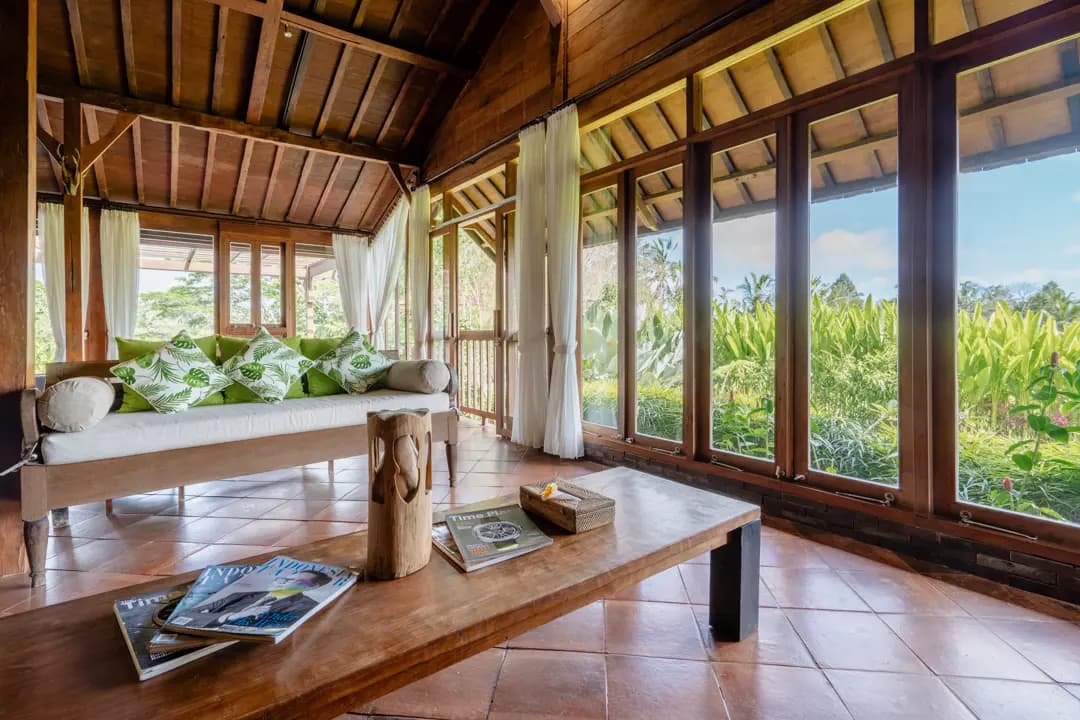
Ayawana is a three-bedroom timber villa among rice fields in Kedisan, Tegallalang, managed by ARM Hospitality Indonesia, a hotel management company based in Denpasar. The quiet that guests come to Ubud for is partly the setting and partly work they never see. This is what goes into it, for guests curious about how a private villa is run and for owners weighing whether to hand theirs to a manager.
Why Ubud is a different brief
ARM reads each part of Bali differently. Seminyak, Legian and Kerobokan rely on international visitors, with sharp seasons. Batubelig and Kuta sit in the heart of tourist demand, where pricing decides how good a high season is; Bale Bali Batu Belig, another ARM villa, works in that market. Ubud, in ARM’s view, draws longer stays and a different expectation of quiet: guests weigh atmosphere more than speed of service.
That shapes how Ayawana is offered. The complete villa is private when booked in full. One- and two-bedroom bookings are available on request under a shared-villa arrangement, and the room descriptions say plainly that this is not a private whole-villa stay, so nobody arrives expecting privacy they did not book.
Upkeep that cannot wait
ARM sums up villa work in one line: “A villa is not a small hotel.” Three differences follow, and upkeep is the first. In ARM’s words, the pool, garden and air conditioning are part of the product, and in Bali’s climate deferred maintenance shows within weeks. At Ayawana, three things stand out:
- The pool. Sun, heat and heavy rain change pool water quickly, so it needs steady checks rather than occasional rescues.
- The greenery. Tropical plants grow fast, especially in the rainy season, roughly November to March, and paths and drains need to stay clear.
- The timber. Wood that lives with humidity and rain needs regular attention: finishes wear, and small problems cost less when they are caught early.
ARM calls this asset protection: operational teams keeping a property in a condition that preserves its long-term value. For guests the practical point is simple: if something is not working, tell the villa team during your stay, so it can be looked at while you are still there.
A calendar with no spare rooms
The second difference is the calendar. A hotel has other rooms to absorb an empty night; a villa does not, so empty nights cost more. ARM’s answer is pricing that moves with demand, plus data-driven marketing, to hold both occupancy and average rate. In practice, at Ayawana:
- The villa team confirms availability and the final price, including any taxes and service charges, so always ask for the price for your exact dates.
- If your dates are flexible, say so; when prices move with demand, flexibility can open up options.
- For one- or two-bedroom bookings, the villa team assigns the bedrooms, and the Master bedroom is normally sold last.
- Ubud draws longer stays, and the whole villa also has a monthly rate, so ask about it if you are planning a long visit.
The FAQ explains what to include when you ask.
Why one review weighs more
The third difference is reviews. A villa has fewer guests than a hotel, so each review weighs more, and in ARM’s view reviews decide the next season. ARM’s answer is guest experience: warm, professional service produces good reviews, and good reviews are next season’s occupancy. Guest service and review handling are part of what ARM runs.
Two practical notes for guests. If something is not right, raise it during your stay; a review written afterwards helps the next guest but cannot change your stay. And when you write one, mention how you booked, whole villa or shared, so future guests can tell whether your experience matches their plans.
For villa owners
ARM operates hotels, villas and apartments on behalf of their owners. That covers daily operations, recruitment and team management, revenue management and dynamic pricing, marketing and online distribution, maintenance and asset condition, guest service and review handling, and detailed regular reporting, so owners never have to chase information. ARM describes running a property as “not one job but four, all of which have to work at once”, and itself as “one team rather than four vendors”. In its own words: “Owners keep the asset. We run everything that makes it earn, and report on it regularly.”
ARM does not quote a single management fee, because it depends on the property; owners are invited to send the details. The villa management page explains how ARM works with villa owners, and the services overview sets out the full scope.
For guests, all of this should stay out of sight. ARM’s signature line is “Crafted with Balinese soul, delivered with global standards”; at Ayawana, that means a villa cared for so that the quiet can do its work. To see the spaces, browse the gallery or start with the whole-villa page.