
Neighborhood Guides
A Slow Morning in Tegallalang: Rice Terraces and Tirta Empul
October 25, 2026
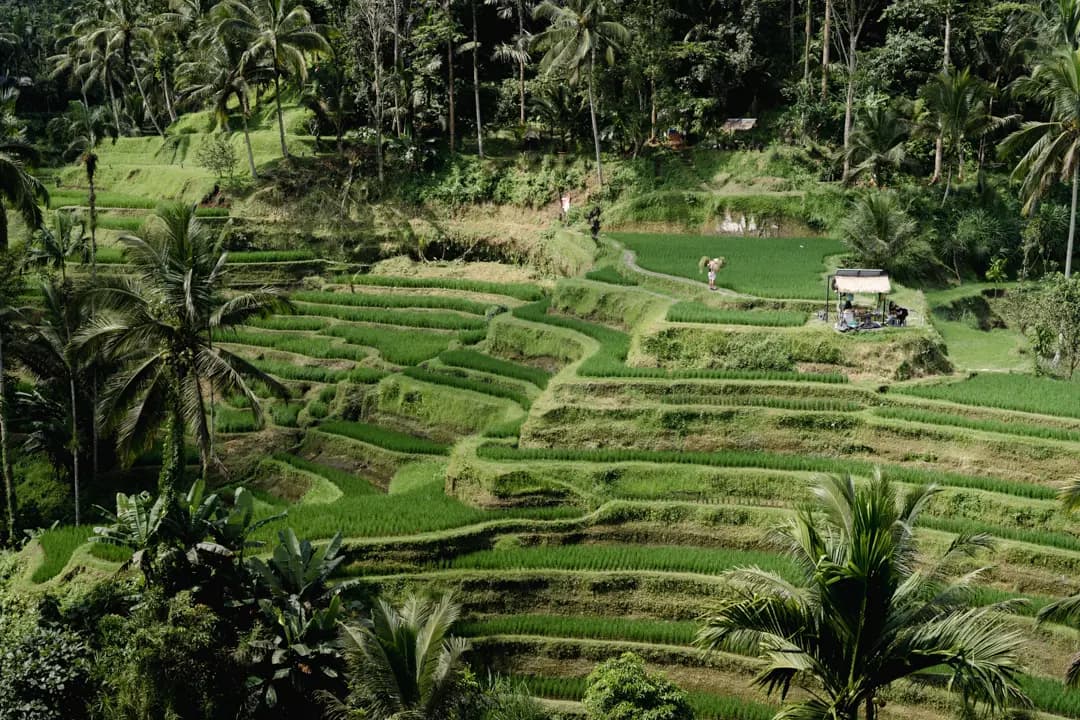
Ayawana is a three-bedroom villa in Kedisan, in the Tegallalang area, with rice fields and tropical greenery all around. The two sights most visitors come to Tegallalang for are close: the rice terraces are about 2.9 km by road and Tirta Empul temple about 4.2 km. That makes a slow morning realistic. You can leave early, see both before the busiest part of the day and be back at the villa for a swim and lunch, with central Ubud kept for later.
Start at the villa
An early start does not have to feel rushed. Ayawana has a yoga spot for a few quiet minutes before you go. Breakfast, lunch and dinner are available at the villa, and breakfast is included in the With Breakfast rate. If you plan to leave early, ask the villa team the evening before how breakfast can fit around your plans. The facilities page lists everything the villa offers.
Pack once for both stops:
- a sarong and sash if you have your own, and a top that covers your shoulders
- shoes with grip for uneven, sometimes muddy paths
- water, sun protection and a light rain jacket
- a change of clothes and a towel if you plan to enter the water at Tirta Empul
The rice terraces, before the crowds
The Tegallalang terraces are about 2.9 km by road from the villa, and travel time depends on traffic. Like most of Bali’s well-known viewpoints, they are busiest from late morning, so an early visit gives you softer light, cooler air and quieter paths.
The terraces are working farmland, not a park. Keep to the main paths rather than the narrow edges between the paddies, step aside for farmers carrying loads, and take the steps slowly, especially after rain, when they turn slippery. If you want to look at local woodcarving afterwards, the main road through Tegallalang is known for its craft shops.
Tirta Empul, dressed for the temple
Tirta Empul is about 4.2 km by road from the villa. It is an active Hindu temple built around a spring, and Balinese worshippers come to pray and bathe in its purification pools, so treat it as a place of worship first and a sight second. It also gets busier as the morning goes on, which is one more reason to go early.
- Dress: wear a sarong and sash, and cover your shoulders and knees.
- Manners: keep your voice low, walk around offerings rather than over them, and do not climb on shrines or walls.
- Photos: ask before photographing anyone who is praying or bathing.
- The pools: if you join the purification, watch how local worshippers move through the spouts and follow their lead, and ask if you are unsure.
- Custom: Balinese temples traditionally ask women who are menstruating not to enter.
If it rains
Bali’s rainy season runs roughly from November to March. Showers often come later in the day, so the morning is frequently the clearer window, though not always. A light rain jacket works better than an umbrella on narrow terrace paths, and temple steps and stone floors stay wet after a downpour, so watch your footing. If the weather closes in, there is no need to push on. Head back, dry off and keep the second stop for another morning; both sights are only a few kilometres from the villa.
Central Ubud, later
Keep central Ubud for the afternoon or another day. Ubud Palace is about 12 km by road from the villa and the Sacred Monkey Forest Sanctuary about 15 km. Both are in the centre, so they pair well in one outing; travel time depends on traffic. Ride-hailing apps such as Gojek and Grab are common in Bali, and the villa has a parking area if you rent a car or scooter.
At the Monkey Forest, put away sunglasses, hats and anything loose, keep food out of sight and do not feed the monkeys.
A morning like this needs little more than an early start and the right clothes. The location page has the map and distances from the villa. If your trip also includes the coast, Bale Bali Batu Belig, an ARM-managed villa between Seminyak and Canggu, is about 43 km by road from Ayawana.